Most fat-tire ebikes look the part. Big tires, beach-cruiser lines, a stance that says "take me anywhere." Then you ride one for an hour and realize you've bought a scooter with pedals: the cranks feel disconnected, the motor surges when you don't want it to, and the moment the battery dips you're pushing 70-plus pounds of dead weight.
It doesn't have to be that way. A fat-tire ebike can be comfortable, stable, and capable on sand and gravel and still feel like a bicycle when you pedal it. Here's what actually separates the two, and what to look for before you buy.
Ask the right question first
The question most buyers ask is "does this look like the bike I want?" The better question is: what will this bike feel like 40 minutes into a ride, when the pavement gets rough and I decide to keep going anyway?
That second question is about pedal feel, and pedal feel comes down to a handful of engineering decisions most spec sheets bury or skip entirely. If you understand those decisions, you can tell in a five-minute test ride whether a bike will keep you riding or keep you on the throttle.
1. Where the motor lives changes everything
Most budget fat-tire ebikes use a hub motor in the rear wheel. It pushes the bike along independently of what your legs are doing. That's fine for throttle cruising, but it's why so many of these bikes feel like you're pedaling alongside the motor instead of with it.
A mid-drive motor sits at the cranks and sends its power through the chain and gears, the same path your legs use. The result is assist that builds with your effort, climbs more naturally, and keeps the bike's weight low and centered between the wheels instead of hanging off the back axle.
If pedaling matters to you, a mid-drive should be near the top of your list. The Surfline uses a 750W Bafang M620 mid-drive for exactly this reason: it has plenty of torque for sand and climbs, but it works with your cadence rather than around it.
2. Gearing decides whether your legs have anything to do
This is the one almost nobody talks about. On a single-speed ebike, there's only a narrow band of speed where pedaling feels natural. Go slower and you're mashing; go faster and your legs spin freely while the motor does all the work. Many riders don't notice until they've owned the bike for a month and realize they stopped pedaling altogether.
Gears widen that window. With a few real ratios, you can pedal efficiently from a slow sandy start up to cruising speed, and you'll actually contribute on climbs instead of just riding the throttle.
We build the Surfline two ways for this reason:
- Single speed ($5,000): quiet, simple, nothing to adjust. The right call for flat ground like beach paths, boardwalks, and cruising town, where the motor handles small hills.
- 5-speed with Microshift Advent derailleur ($5,500): the pick if pedal feel is your priority. Real gearing for real hills, longer routes, and pedaling across the whole power band.
Same frame, motor, battery, suspension, and brakes. The only difference is the drivetrain. If you're reading an article titled "still feels good to pedal," we'd point you to the 5-speed.
3. Suspension should calm the chatter, not swallow your effort
Fat tires absorb a lot on their own, which is why most fat-tire ebikes skip rear suspension or use a cheap spring fork. The trouble shows up on long rides: every crack, root, and washboard section travels straight up into your hands, lower back, and saddle. You end up standing, bracing, or cutting the ride short.
Good suspension isn't just comfort. It keeps the tires planted, which means better control in corners and on loose surfaces, and less fatigue so you have something left to pedal with at the end of the day.
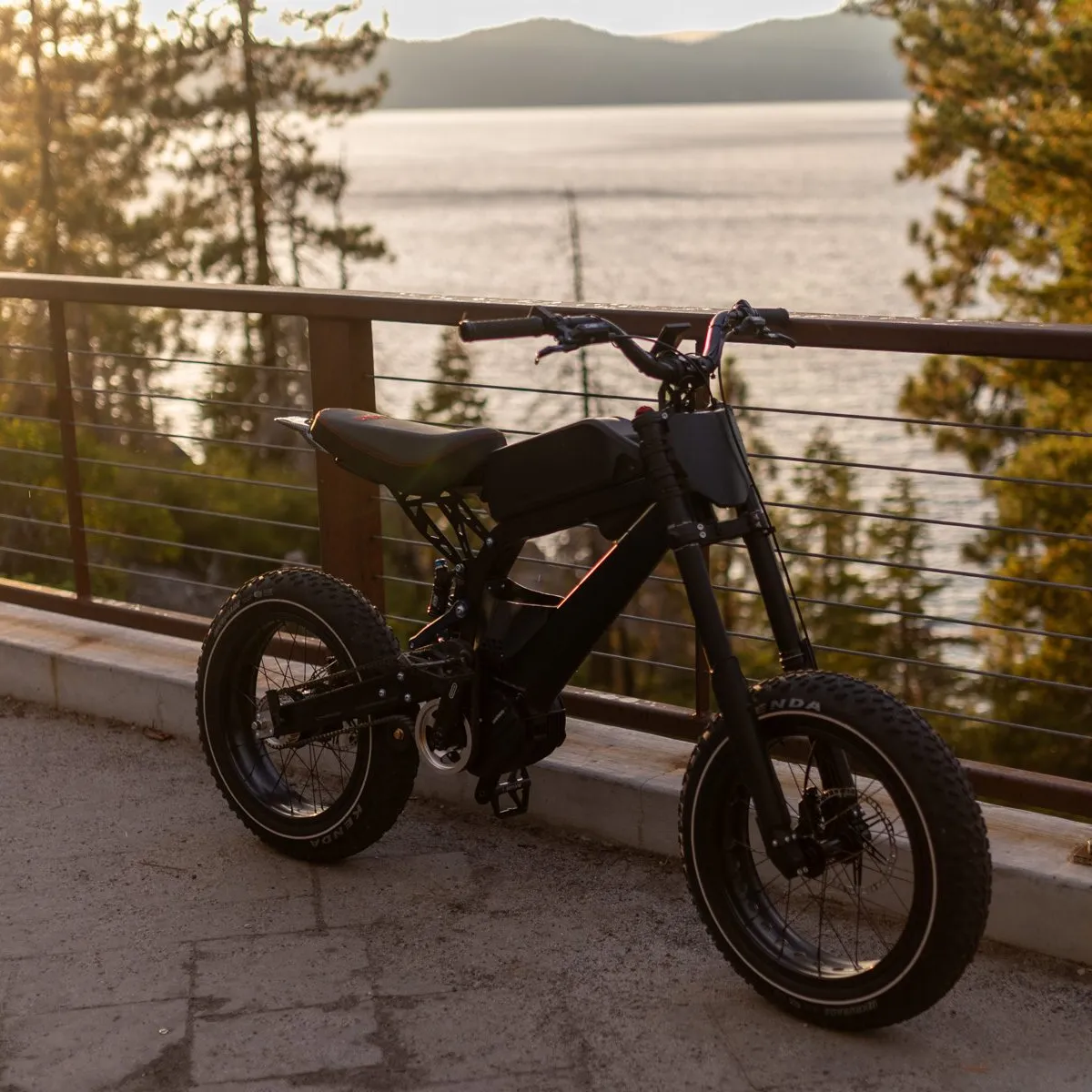
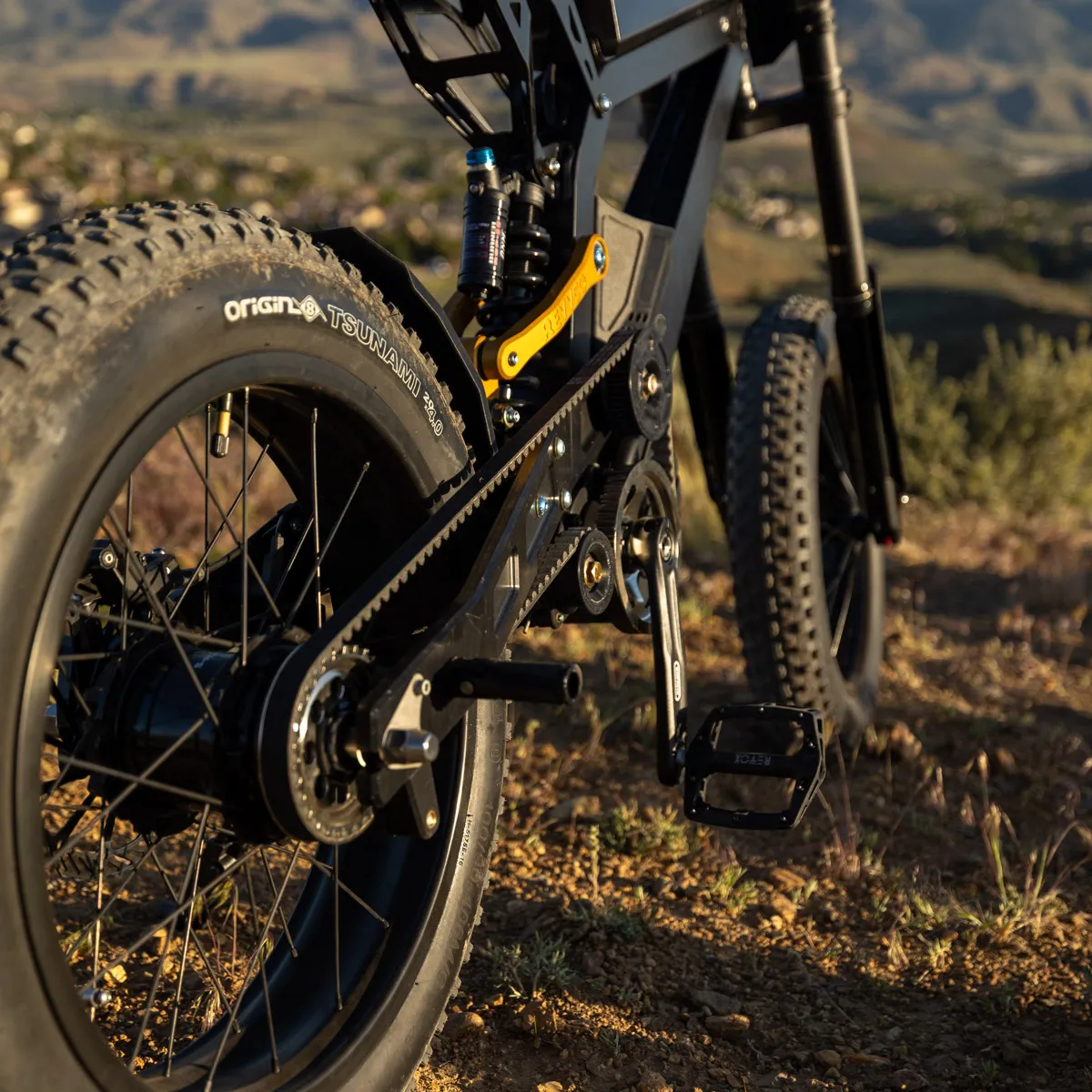
The Surfline runs 160mm of travel front and rear, paired with billet aluminum rear suspension arms and linkage on a steel frame. That's closer to a trail bike than a beach cruiser, and it's why riders use it for everything from single track to daily commuting.
4. Tire volume matters more than tire width
"4-inch tires" on a spec sheet tells you less than you'd think. What you feel on the road is tire volume, casing, and pressure. Run fat tires too hard and they bounce and skitter; run them too soft on pavement and the bike feels like it's rolling through wet sand.
Look for a bike where the tire size suits the wheel and the terrain you'll actually ride, and get in the habit of adjusting pressure: lower for sand and loose gravel, higher for pavement. The Surfline runs 20 × 4-inch fat tires. The smaller wheel keeps the bike nimble and the rider low and planted, while the 4-inch tire floats over sand and grips gravel.
5. Be honest about weight
Fat-tire ebikes are heavy. Motors, big batteries, wide rims, and suspension all add pounds, and anyone claiming otherwise is selling you something. The Surfline weighs 75 lbs, which is right in line with a full-suspension fat-tire ebike carrying a real battery.
What matters more than the number is where the weight sits and how the bike handles it. A low, centered mid-drive, sorted suspension, and usable gearing make a heavy bike feel responsive. A rear hub motor, a single speed, and a rigid frame make the same weight feel like an anchor. When you test ride, pay attention to how quickly the bike responds when you stand up, turn in, or accelerate from a stop.
6. Brakes and serviceability are part of ride feel
Confidence is a big part of what makes a bike fun to ride, and that starts with brakes. A heavy bike needs strong, predictable stopping power. Look for hydraulic disc brakes with large rotors. The Surfline uses SRAM DB6 hydraulic discs with 180mm rotors front and rear.
Then think about year two. Proprietary belt drives and dealer-only parts can turn a simple repair into weeks off the bike. A standard chain drive can be serviced by any bike shop in any town. The Surfline is chain drive by design, the motor and battery are field-replaceable, and it's backed by a 2-year warranty on frame, motor, and battery.
7. Know your class and where you'll ride
Before you fall for a bike, make sure it's legal where you plan to ride it. Class 2 ebikes have a throttle and pedal assist and are governed to 20 mph, and they're permitted on roads, bike lanes, and many multi-use paths. Trails, parks, and beaches often have their own rules, so always check locally. (For more on this, read our Class 2 vs. Class 3 guide.)
The Surfline is configured as a Class 2 ebike: thumb throttle, 5 levels of pedal assist, 20 mph top speed, and a 52V UL-listed battery good for roughly 25–50 miles depending on terrain, rider weight, and how much you lean on the throttle.
A quick test-ride checklist
Whatever bike you're considering, take it for a real ride, not a lap of the parking lot. While you're on it, check:
- Does the assist build smoothly with your pedaling, or does it surge and cut out?
- Can you find a comfortable cadence at both slow and cruising speeds?
- How does the bike feel over cracks, curbs, and gravel? Are you bracing or relaxed?
- How quickly does it respond when you stand up, turn, or brake hard?
- Turn the assist all the way down. Is it still rideable, or does it feel dead?
That last one is the tell. A bike that still feels good at low assist is a bike you'll keep riding when the battery is low, the route gets longer, or you just want to work a little.
Why we built the Surfline this way
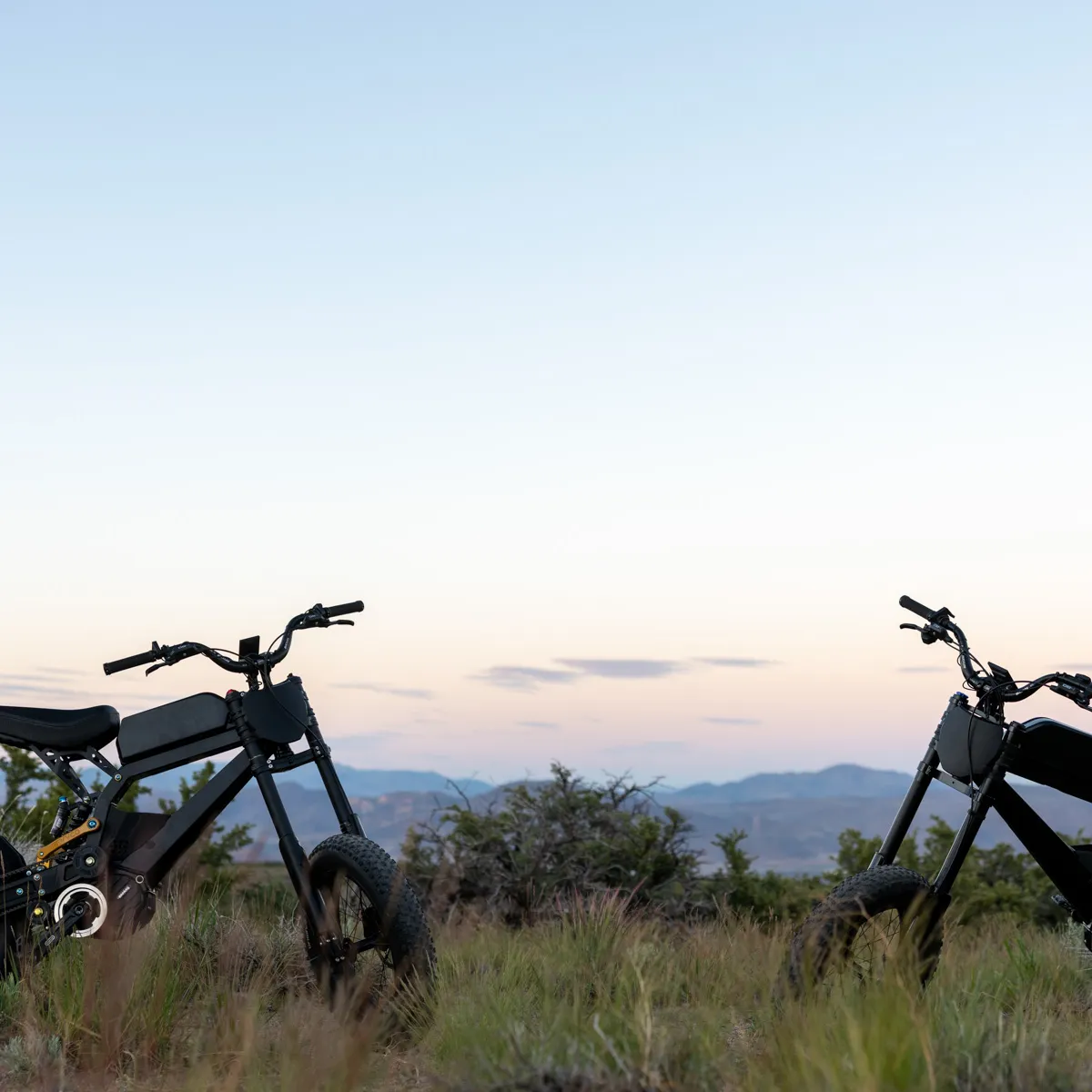
We built the Surfline for riders who want to feel the bike under them. It's a hybrid of mountain bike and beach cruiser: mid-drive power, full suspension, fat tires, and a chain drive you can fix anywhere. It's comfortable enough for a lazy beach lunch and capable enough to take the long way home through the hills.
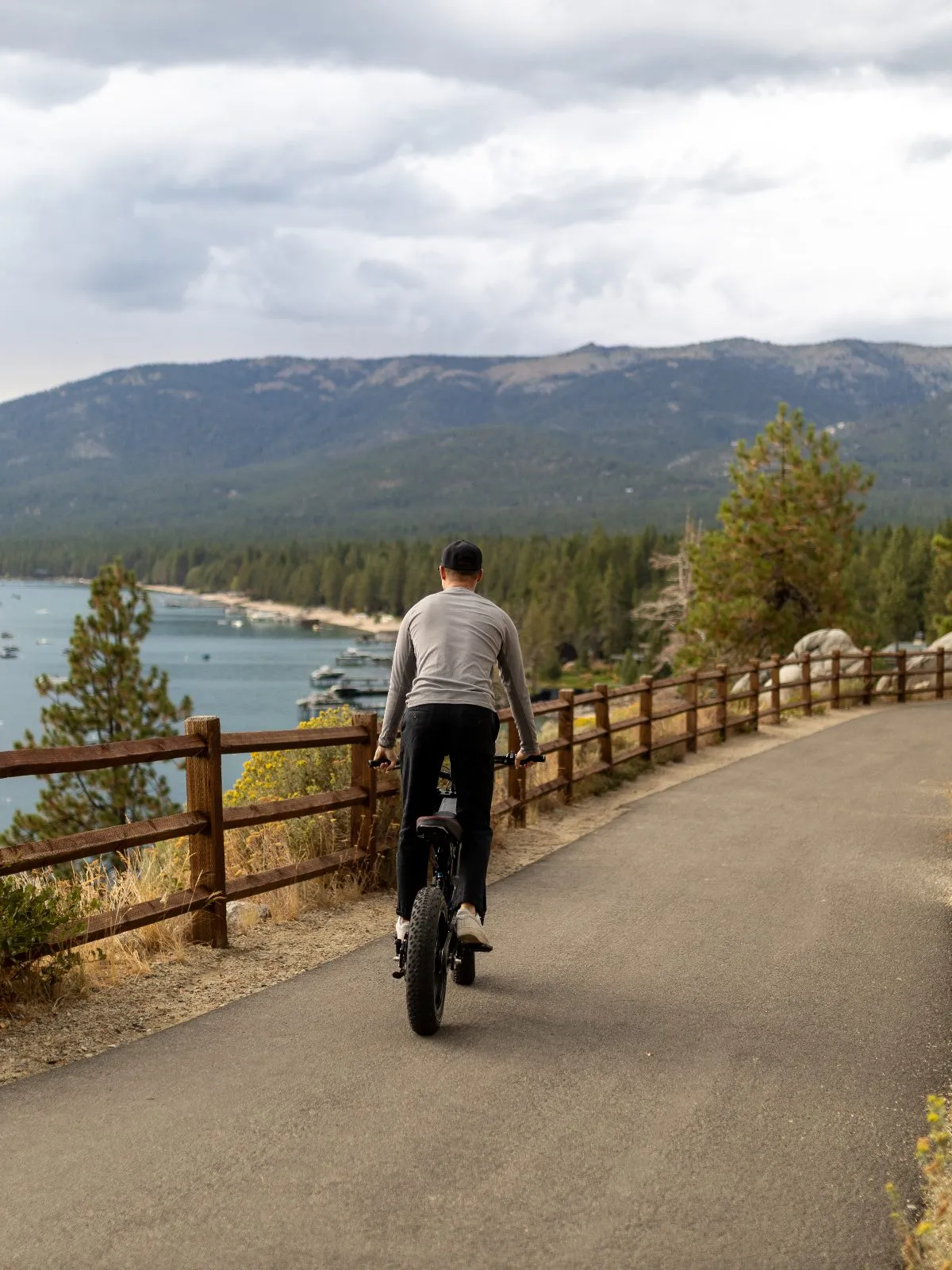
"I live in Tahoe and like to commute on my bike but this bike takes my back and forth commute to the next level. Super smooth on and off trail, the pedal assist makes any hill an easy ascent, battery life is excellent, and it looks sick."
Jacob Brown, Surfline owner
The Surfline starts at $5,000 (single speed) or $5,500 (5-speed), with free shipping in the US, 30-day returns, a 2-year warranty, and financing available at checkout.
See the Surfline and choose your build →
Near Reno or Tahoe? Book a test ride and run through the checklist above yourself. We'd rather you feel the difference than take our word for it.