Simple Ebike Maintenance: Quick Habits That Keep Your Ebike Feeling New
Most ebike problems don't show up all at once. They build up quietly: a tire running a little low, a chain drying out after a dusty ride, a bolt backing off a quarter turn at a time. Eventually a small thing becomes a noise, the noise becomes a repair, and the repair becomes a weekend without your bike.
The good news is that you don't need a shop stand, a garage full of tools, or a mechanic's background to prevent most of it. A few short, repeatable habits catch problems while they're still cheap and easy. Here's the routine we use on our own bikes in Reno and Tahoe, broken down by how often you need to do it.
Before every ride: the two-minute check
This takes less time than filling a water bottle, and it catches the problems most likely to end a ride early.
- Squeeze both brakes. The levers should feel firm and stop well before they touch the grips. If a lever feels soft or spongy, or pulls closer to the bar than usual, don't ride until it's checked.
- Check tire pressure. Fat tires lose a meaningful share of their pressure from just a pound or two of air, so eyeballing them doesn't work. More on this below.
- Check your battery charge and plan the ride around it, especially if your route has big climbs.
- Make sure the battery is seated and locked and the wheels are secure.
Get tire pressure right (it matters more on fat tires)
Tire pressure changes how an ebike rides more than almost anything else, and fat tires are especially sensitive. A 4-inch tire runs at far lower pressure than a road or mountain bike tire, so a change of just 2 or 3 psi can turn a planted, grippy bike into a bouncy one, or a fast-rolling bike into one that feels like it's dragging through sand.
- Use a low-pressure gauge. Many standard pumps and gauges aren't accurate at the low pressures fat tires use. A dedicated low-pressure gauge is inexpensive and worth it.
- Stay within the range printed on your tire's sidewall. Never go over the maximum.
- Adjust for the surface. Run lower pressure for sand and loose dirt so the tire can spread out and float. Run higher pressure for pavement so the bike rolls efficiently and handles crisply.
- Check more often when temperatures change. A bike stored in a cool garage and ridden on hot pavement, or the reverse, will see its pressure shift.
After every ride: a quick wipe-down
Dust, sand, and grit are the enemies of every moving part on a bike. You don't need a full wash after every ride, but a quick wipe-down keeps grit from grinding into the parts that wear.
- Wipe the chain with a rag to remove the dirt that collects on it.
- Wipe the suspension stanchions, the shiny upper tubes of the fork and shock. Grit on these gets dragged into the seals every time the suspension compresses.
- Wipe the frame and touchpoints (grips, saddle, display) if they're dusty or wet.
- Rinse after beach rides. Salt and sand are hard on chains, bolts, and bearings. After a beach ride, gently rinse the drivetrain and frame with low-pressure fresh water, then dry the bike.
How to wash an ebike (without damaging it)
When your bike needs a real clean, the rule is simple: low pressure, no direct spray at the electronics.
- Turn the bike off first, and remove the battery if your bike allows it. Keep the battery contacts dry.
- Never use a pressure washer. High-pressure water forces its way past seals into bearings, the motor, and electrical connections.
- Use a bucket, soft brush, and bike-specific cleaner, or a hose on its gentlest setting.
- Avoid spraying directly at the motor, display, battery mount, and wiring connectors. Wipe these areas with a damp cloth instead.
- Keep degreaser and lube off the brake rotors and pads. Contaminated brakes lose stopping power and often squeal. If it happens, pads may need to be replaced.
- Dry the bike afterward, then re-lube the chain.
Every week or two: chain and drivetrain care
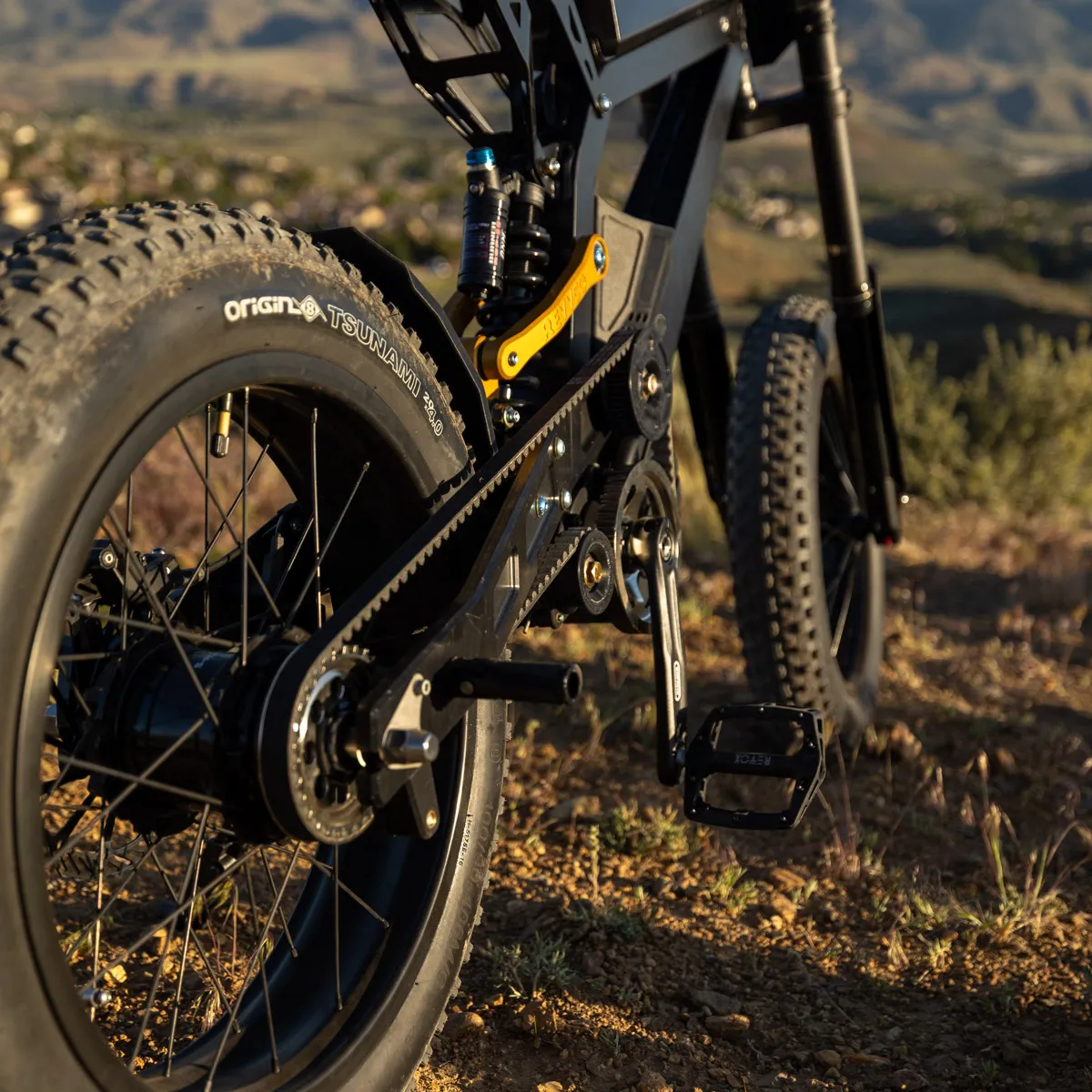
Ebike chains work harder than regular bike chains. A mid-drive motor sends its power through the chain along with your legs, so the drivetrain carries more load and wears faster. A little regular care goes a long way.
- Lube the chain after cleaning, after wet or sandy rides, or whenever it starts to sound dry or noisy. In dusty conditions like ours around Reno and Tahoe, a dry-style lube picks up less grit.
- Wipe off the excess. Lube belongs inside the chain's rollers, not on the outside where it attracts dirt.
- Check for chain wear every few hundred miles with an inexpensive chain checker. Replacing a worn chain on time is cheap. Waiting too long can wear out your gears too, which is not cheap.
- On a derailleur bike, pay attention to shifting. Hesitant or noisy shifts usually mean the cable needs a small adjustment.
One reason we built the Surfline with a standard chain drive: any bike shop in any town can service it, source parts, or replace the chain. You're never waiting on a dealer for a proprietary part.
Every month: bolts, brakes, and suspension
Check your bolts. Vibration from rough trails and fat tires can slowly loosen fasteners. Once a month, check the important ones: axles, stem and handlebar, crank arms, pedals, and suspension pivot hardware. Use a torque wrench and your bike's recommended torque specs. Overtightening can damage parts just as easily as undertightening can.
Check your brake pads. Look at pad thickness through the caliper. Heavy bikes and long descents wear pads faster than you might expect. Replace them before they get down to the metal backing plate. If the levers feel spongy even with good pads, the brakes probably need a bleed, which any shop that works on hydraulic brakes can do.
Check your suspension. Push down on the bike and watch the fork and shock. They should move smoothly and quietly, without clunks. Grab the saddle and try to wiggle the rear of the bike side to side. If you feel play or hear knocking from the rear suspension, the pivots may need attention. If your fork or shock uses air, check its pressure periodically, because it slowly drops over time.
Charge your battery with some rhythm
The battery is the most expensive single component on your ebike, and how you charge and store it has a real effect on how long it lasts.
- Use the charger that came with your bike. Mismatched chargers can damage the battery or create a safety risk.
- Charge somewhere safe: indoors, on a hard, non-flammable surface, away from anything combustible. Don't leave a charging battery unattended for long periods.
- Avoid deep drains when you can. Regularly running the battery completely empty is harder on it than topping it off.
- Let a cold battery warm up before charging. After a cold ride or a night in a freezing garage, bring the battery to room temperature first.
- Keep it out of extreme heat. Don't leave the battery in a hot car or in direct summer sun for long periods.
- For long-term storage, such as over winter, store the battery indoors at a partial charge (around half) rather than full or empty, and top it up every month or two.
- Inspect it occasionally. If a battery is swollen, cracked, leaking, unusually hot, or has been in a hard crash, stop using it and contact the manufacturer.
Listen to your bike
This is the simplest habit of all, and one of the most useful. You know what your bike normally sounds like. When something new shows up, like a click, creak, rub, squeal, or rattle, don't just turn up the music and ride through it. New noises are almost always early warnings: a loose bolt, a dry chain, a rubbing rotor, or a worn bearing. Found early, most of them are five-minute fixes.
The same goes for the electrical system. If your display shows an error code, the assist cuts in and out, or the motor makes an unusual sound, stop and check the wiring connectors for damage or looseness, then contact support if the problem continues.
Once a year: a professional tune-up
Even with good habits at home, a yearly visit to a qualified shop is worth it, especially before riding season. A good mechanic will check bearings, bleed the brakes if needed, service the suspension, inspect the wheels, and catch wear you might not notice. If you ride often or hard, consider going twice a year.
Built to be easy to own
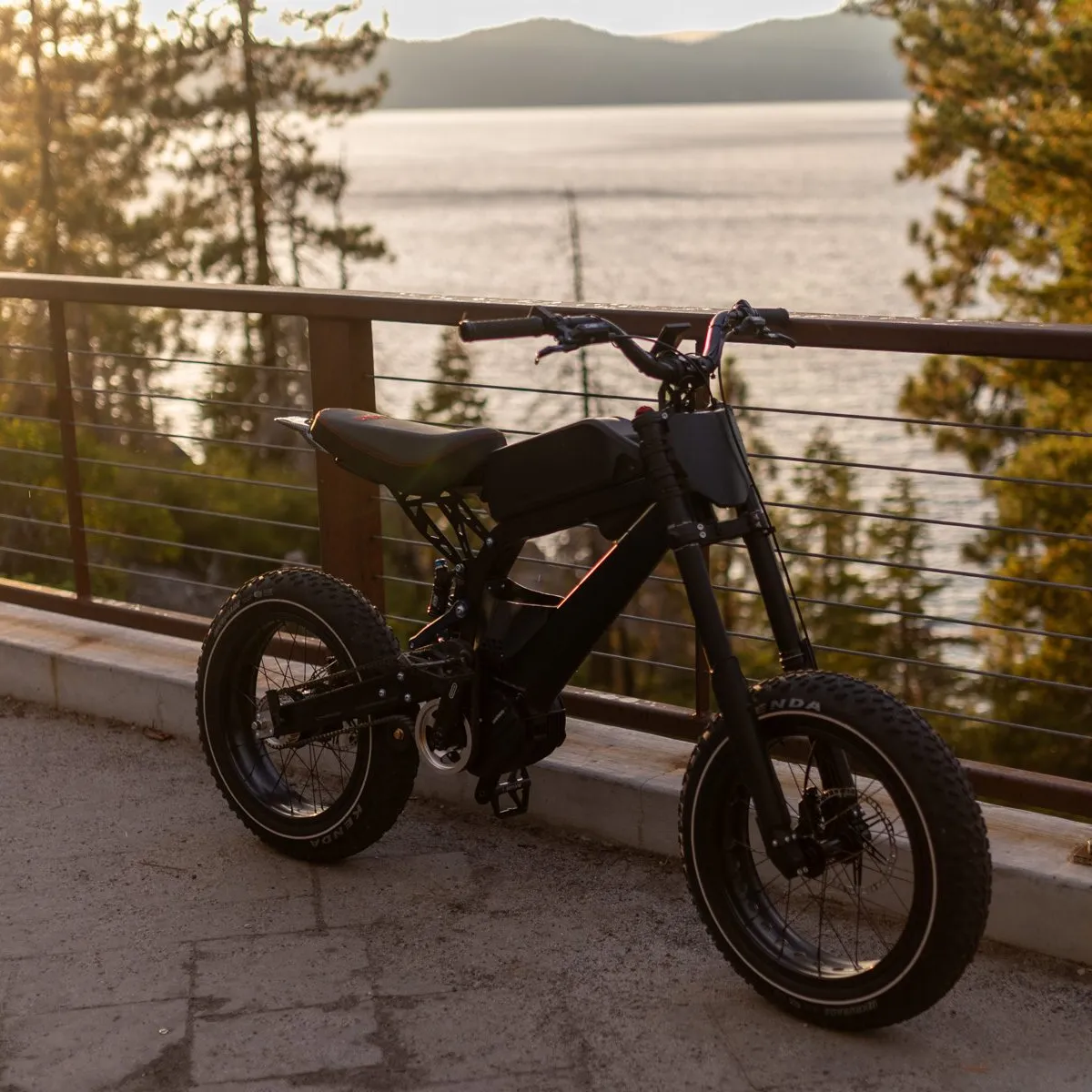
We designed the Surfline to be simple to maintain for the long haul. It has a standard chain drive any shop can work on, SRAM DB6 hydraulic disc brakes that any competent shop can service, and a motor and battery that are field-replaceable, with replacement parts shipped directly from us. It's backed by a 2-year warranty on the frame, motor, and battery. Consumables like tires, brake pads, and the chain are wear items, which is exactly why the habits above matter.
Already own a Surfline and have a question? Visit our Warranty & Service page or contact us. Real people, fast answers.
Still deciding on a bike? Read our guide to choosing a fat-tire ebike that still feels good to pedal, or book a test ride in Reno or Tahoe.
This guide covers general maintenance habits. Always follow the manufacturer's instructions for your specific bike, components, and battery, and have a qualified mechanic handle any repair you're not comfortable doing yourself.